January 19, 2015

Sri Aurobindo himself was a Hindu for only 12 years

Jammu and Kashmir and the Hindu resolve

Sandeep
Radha,
Regarding Sri Aurobindo's withdrawal from the freedom struggle, he was already shown in visions in 1907 that India would be automatically liberated due to the fall of the British Empire after a war (and not due to Gandhi). If he had continued to publicly debate with Gandhi and influence the freedom struggle, the British who kept spies in Pondicherry to watch his every move right until the late 1930s would have put pressure on the French to get him deported back to British India.
You raise a valid question "why do some people dissociate from Hinduism" which deserves an anthropological study in itself.
IIRC, the Ramakrishna Mission sought to dissociate to gain tax benefits for minorities (right?)
As far as Americans as concerned, I see two reasons
1) Hinduism has had a bad brand image. It became identified with "cows caste curry" because of which they didn't feel like they should be identified with it (even though they drink its nectar). As India becomes more prosperous, it is possible that more people overseas would identify themselves as Hindus. Right now, Tulsi Gabbard is not shy on being known as a Hindu and there are also quite a few American men and women who take on Hindu names. Lets hope things change for the better.
On the other hand, Americans are quite willing to call themselves "Buddhist" because it doesn't have the same branding problem. Although there are plenty of poor and superstitious Tibetans, Americans tend to sympathize with Tibetan oppression and not feel repelled by it.
2) American culture tends to be free-wheeling and individualistic. Some Americans who take up Hinduism have already been to church in their childhood and ended up rejecting Christianity. Consequently, they don't want to be burdened with the membership of yet another "religion" in their adulthood.
Incidentally, you forgot to mention Peter Heehs, biographer of Sri Aurobindo and an inmate of the Sri Aurobindo Ashram, who has gone further and claimed that Sri Aurobindo himself was a Hindu for only 12 years !
Sandeep
You are dodging the question after asking for evidence :-)
As far as I can see, some are Hindu in external form only, while others are Hindu in spirit. There is a whole spectrum of approaches to Hinduism which need to be understood instead of using black/white categories to label someone as Hindu or not-Hindu.
I won't digress from your main topic unless you want to continue this thread, but I had to ask my question since you seem to be promoting an inherent distrust of white women who turn to Hinduism which is not fair, because many of them are attracted to Hinduism after being repelled by rigidity of Abrahamic religions.
This is unfair to white men as well, against whom you don't seem to have any issues.
As far as the Mirra Alfassa is concerned, I have found that many Indian men (and in Sri Aurobindo's time, some of his male disciples as well) seem to resist accepting her spiritual stature after gaining cursory information about her. They eventually drop their inhibitions after learning more about her. Maybe some day you will undergo the same evolution.
Sandeep
Radha asked "Let me ask my critics here a pointed question - how Hindu is the Auroville commune today and how Hindu are the inmates of the ashram?"
Just curious. What is your definition of Hindu ?

January 17, 2015

Sri Aurobindo's grand exposition

The context of Sri Aurobindo's spiritual endeavors was an India where new Western philosophies—communism, Nietzschean individualism and Freudian sexual hermeneutics—were fashionable and fermenting confusion among India’s elite. Aurobindo attempted to reconcile these Western ideas with the sublime teachings of Indian philosophy. He developed a teaching known as Integral Yoga, which combined the Hindu yoga paths of knowledge, devotion, and karma. He also developed a theory of evolution and involution, processes by which human beings can evolve into a superior state of being. Thus, his teachings created a synthesis of ancient Indian wisdom and contemporary Western ideas.
Impact and Influence
Sri Aurobindo has had a significant impact on Eastern and Western thought. The incorporation of evolutionary ideas into Hindu philosophy provided Hinduism with an infusion of modernity.
One of Sri Aurobindo's main contributions to Indian philosophy was to introduce the concept of evolution into Vedantic thought. Samkhya philosophy had already proposed such a notion centuries earlier, but Aurobindo rejected the materialistic tendencies of both Darwinism and Samkhya, and proposed an evolution of spirit rather than matter.
He rejected the Hindu doctrine of Maya (the illusionary world) found in Advaita Vedanta, and suggested a linkage between the ineffable Brahman or Absolute and the world of multiplicity by positing a transitional hypostasis between the two, which he called "The Supermind." The supermind is the active principle present in the transcendent Satchidananda; a unitary mind of which our individual minds and bodies are minuscule subdivisions.
Thus, Aurobindo's later years represent an effort to forge greater unification and synthesis between East and West. Kant's sublime, Hegel's absolute, Schopenhauer's will, Kierkegaard's passion, Marx's matter, Darwin's evolution, Nietzsche's overman, Bergson's élan vital, all find their due representation in Sri Aurobindo's grand exposition. His thought successfully overarches cultural as well as religious chasms. S.K. Maitra and Haridas Chaudhuri were first among the academicians to discern the import of Sri Aurobindo's integral philosophy. D.P. Chattopadhyay wrote a seminal treatise juxtaposing Sri Aurobindo and Marx to examine their utopian prophecies.

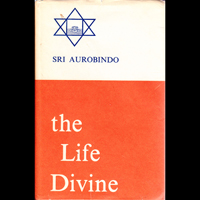
Sri Aurobindo is considered one of the greatest spiritual philosophers of modern India, who through his training as a Western scholar and deep mystical understanding, was able to present the wisdom of the East in a form adapted to Western thought. The Life Divine is a visionary work of great scope and relevance to our present day.


January 04, 2015

Speculative chronology and fresh myths

Tweets: vintage michel danino: sane, factual, devastating. "ihc should realize blame for distortions is at their door[step]" http://t.co/DaYDxI97Oy

Where Dr. Shashi Tharoor writes about ancient India's immense contribution to Maths, science, astronomy. This in 2003. http://t.co/Z4e9ZeOt61

Science and Religion. A Historical Introduction http://t.co/hRoql5aO8P

Descartes’ Ontological Argument And What It Means For How We Understand Philosophy http://t.co/YgNmTWnDxF

The Need For An External Form Of the Divine http://t.co/FCRCO0cmuF


“voices being raised in certain influential quarters on the need to rewrite Indian history through an abundant use of ancient mythology and speculative chronology, while fresh myths, like that of Indians originally peopling the whole world, are being created.” - See more at 

The Crest of the Peacock: Non-European Roots of Mathematics – 2010 by George Gheverghese Joseph  http://t.co/sqVBnZ8Tm4

Minding the Modernposted by Thomas Pfau

MODERNITY AS A HERMENEUTIC PROBLEM

To stipulate that we cannot appraise the thrust and significance of ideas and concepts independent of the historical context supposed to have generated them means preemptively to subordinate philosophical and theological hermeneutics to historical narratives. 
Yet such narratives don’t just write themselves but rest on myriad interpretive choices. The very labor of specifying and rendering intelligible historical contexts—both for those inhabiting them and for historians belatedly returning to them—actually presupposes conceptual frameworks (not necessarily explicit) on which all hermeneutic practice depends. 

The Geography of Thought by Richard E. Nisbett http://t.co/rOE2PC3L2G 

Injunction and denotation in the Veda

andrew ollett at The Indian Philosophy Blog 
What are the principles by which we divide texts into portions, and why would we want to do that in the first place? What Elisa has referred to as “the prescriptive portion of the Veda” is what Mīmāṃsā authors call →

Follow the Judeo-Vedic Savitri Era Religion

Tusar Nath Mohapatra at Savitri Era 
In the long history of the cycles of civilisation in the world many details have vanished & hence it's conjectural to claim cultural purity. Debating over how people of different religions behave with each other is futile exercise. Sri Aurobindo tells to say goodbye to old faiths. 
Period during which Kings were competing with each other by building huge temples establishing their claim to fame can be called Stone Age. Savitri Era urges to extricate yourself from the hegemony of temples and mythology and apply the principles of Self-Perfection upon oneself. In order to judge if something... more »

January 02, 2015

Honey on a tree nearby